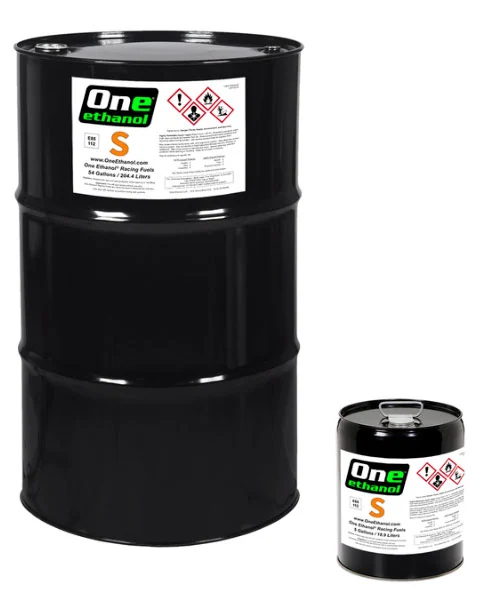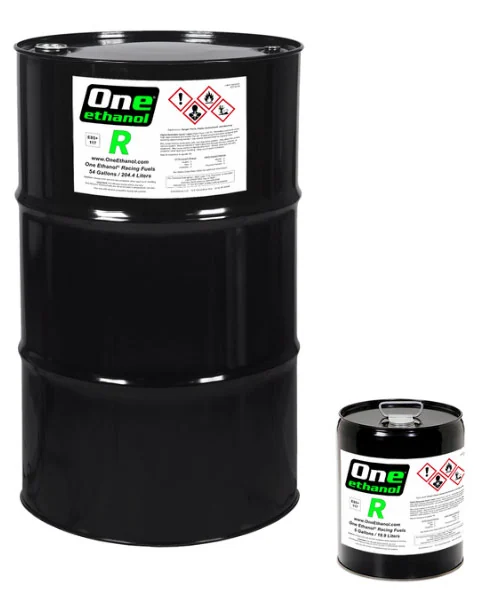
2 photos from ATI Performance Products. Select the photo to enlarge it.
ATI Fuel - 112S - 54G - Ethanol - Drum
Fits: See ATI's description and chart listing for the applications ATI lists; email us your vehicle, engine and transmission to confirm fitment before ordering.
Freight quote. Ships by freight from ATI in Maryland. Email us your ZIP code and we'll quote delivery and confirm ATI's lead time before you pay.
No email app? Write to rrmotorservices@gmail.com
Email a question about this partor write to rrmotorservices@gmail.com
Ships from ATI Performance Products in Gwynn Oak, Maryland. We order it from ATI when you place your order and email you the tracking when it ships. Your card is only charged after the supplier confirms the part. We confirm stock and lead time with ATI before charging your card.
Notice: Race fuel is a flammable liquid: it ships only by ground freight from ATI, so we quote delivery before you pay.
Description
One Ethanol Race Fuel
On ATI's chart for this part:
- ONE ETHANOL PRODUCT S - 54 GAL
Product description from ATI Performance Products.
Product descriptions, charts, photos and installation instructions from ATI Performance Products (atiracing.com) and ATI's price list. Sold by RR Motor Services LLC, an ATI dealer.
Installation instructions
ATI instructions: One Ethanol R SDS
ATI's instructions (8 pages), shown as published by ATI; the original pages with every picture are below.
SDS Revised: 11/16/2022
ONE ETHANOL Safety Data Sheet
ONE ETHANOL R
SECTION 1 – IDENTIFICATION
Product Name: One Ethanol R For Chemical Emergency Spill, Leak, Fire, Exposure or Accident Chemical Name: Denatured Ethyl Alcohol Call CHEMTREC Day or Night Synonyms: Denatured Alcohol; Fuel Alcohol DOMESTIC NORTH AMERICA Chemical Family: Alcohol 800-424-9300 Manufacturers One Ethanol 703-527-3887 (collect calls accepted) Address 1111 O.E. Bieri Industrial Drive Lowell, MI 49331
Recommended Use: Racing Fuel
SECTION 2 – HAZARDS IDENTIFICATION
Signal Words: Danger
Hazard Classifications Flammable Liquids, Category 2 Skin Irritation, Category 2 Eye Irritation, Category 2A Germ Cell Mutagenicity 1B Reproductive Toxicity, Category 2 Specific Target Organ Toxicity, Single Exposure, Category 1 (Eyes, Central Nervous System) Specific Target Organ Toxicity, Repeated Exposure - Inhalation, Category 2 (Auditory System, Eyes) Hazardous to the Aquatic Environment, Acute, Category 3 Hazardous to the Aquatic Environment Chronic, Category 3
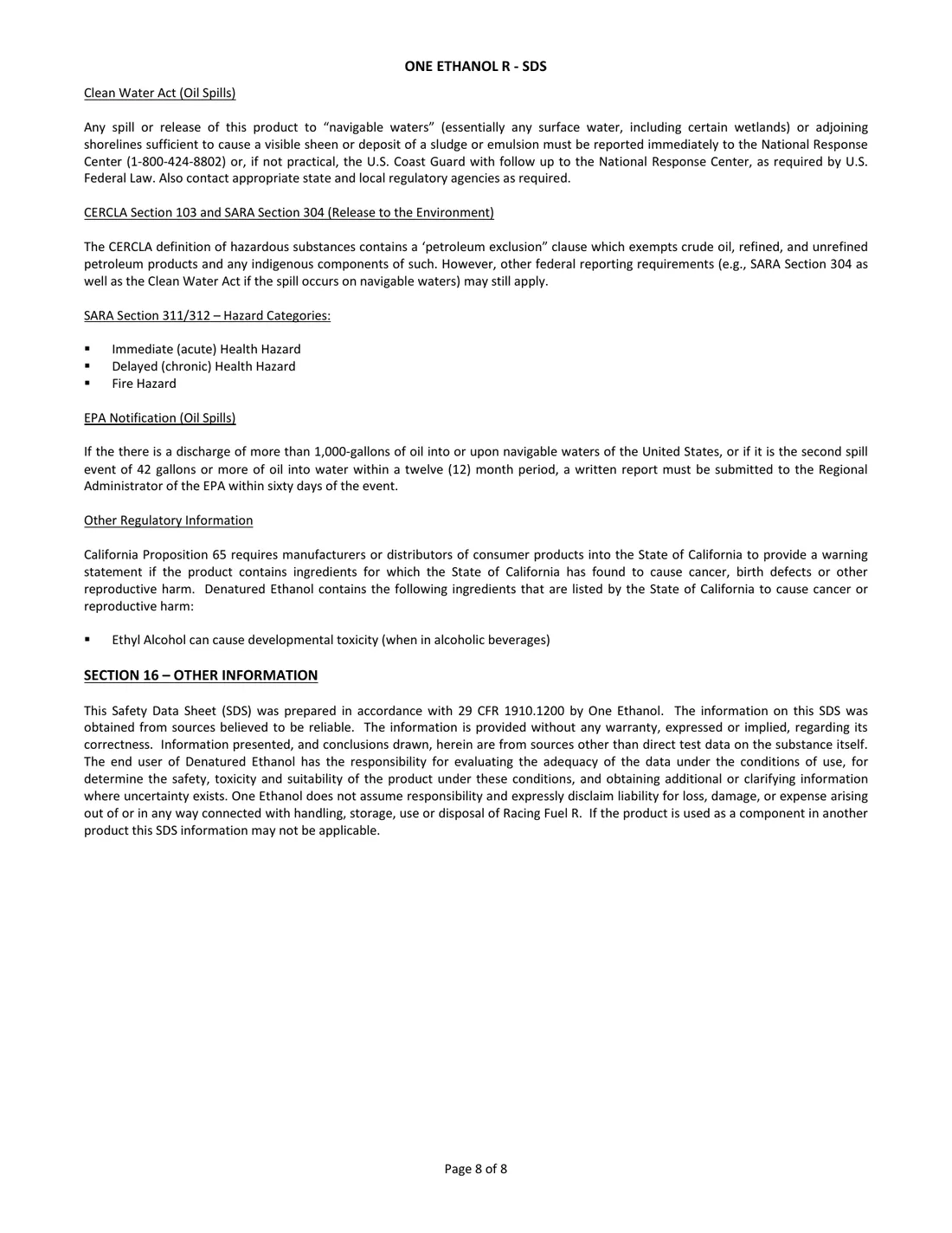
Label Elements ONE ETHANOL R - SDS Hazard Statements H225 – Highly flammable liquid and vapor. H301 + H311 + H331 – Toxic if swallowed, in contact with skin, or if inhaled. H304 – May be fatal if swallowed and enters airways. H315 – Causes skin irritation. H319 – Causes serious eye irritation. H336 – May cause drowsiness or dizziness. H340 – May cause genetic defects. H350 – May cause cancer. H361 – Suspected of damaging fertility or the unborn child. H373 – May cause damage to organs through prolonged or repeated exposure if inhaled. H402 – Harmful to aquatic life. H412 – Harmful to aquatic life with long lasting effects.
Precautionary Statements
Prevention P201 - Obtain special instructions before use. P202 - Do not handle until all safety precautions have been read and understood. P210 - Keep away from heat, sparks, open flames and/or hot surfaces. - No smoking. P233 - Keep container tightly closed. P235 - Keep cool. P240 - Ground and/or bond container and receiving equipment. P241 - Use explosion-proof electrical, ventilating and/or lighting equipment. P242 - Use only non-sparking tools. P243 - Take precautionary measures against static discharge. P260 - Do not breathe dust, mist, gas, vapors, spray. P264 - Wash thoroughly after handling. P270 - Do not eat, drink or smoke when using this product. P271 – Use only outdoors or in a well-ventilated area P273 - Avoid release to the environment. P280 - Wear protective gloves and eye/face protection. P281 - Use personal protective equipment as required.
Response P301 + P310 + P330 If Swallowed: Immediately call a POISON CENTER or doctor/physician. P370 + P378 - In case of fire: Use appropriate media Carbon Dioxide, "alcohol -type foam," or dry chemical for extinction. P302 + P352 - IF ON SKIN: Wash with plenty of soap and water. P362 - Take off contaminated clothing and wash before reuse. P332 + P313 - If skin irritation occurs: Get medical advice/attention. P305 + P351 + P338 - IF IN EYES: Rinse cautiously with water for several minutes. Remove contact lenses, if present and easy to do. Continue rinsing. P337 + P313 - If eye irritation persists: Get medical advice/attention. P321 - Specific treatment, see supplemental first aid information. P308 + P313 - If exposed or concerned: Get medical advice/attention.
Storage/Disposal P405 - Store locked up. P403+P235 - Store in a well-ventilated place. Keep cool. P501 - Dispose of content and/or container in accordance with local, regional, national, and/or international regulations.
Other Hazards None known
Emergency Response Overview
Physical State: Liquid.
Hazards: Highly Flammable liquid/vapor (Flash Point = 50 °F). Potentially explosive vapor. High vapor pressure (VP = 46 mm Hg) and heavier than air (VD = 1.6). Use an alcohol resistant foam to suppress fires.
May cause irritation to the eyes, skin and respiratory system. May affect the central nervous system. May be harmful or fatal if swallowed. May be harmful if inhaled or absorbed through the skin.
Routes of Entry: Inhalation; skin contact; eye contact; and ingestion.
Page 2 of 8 ONE ETHANOL R - SDS
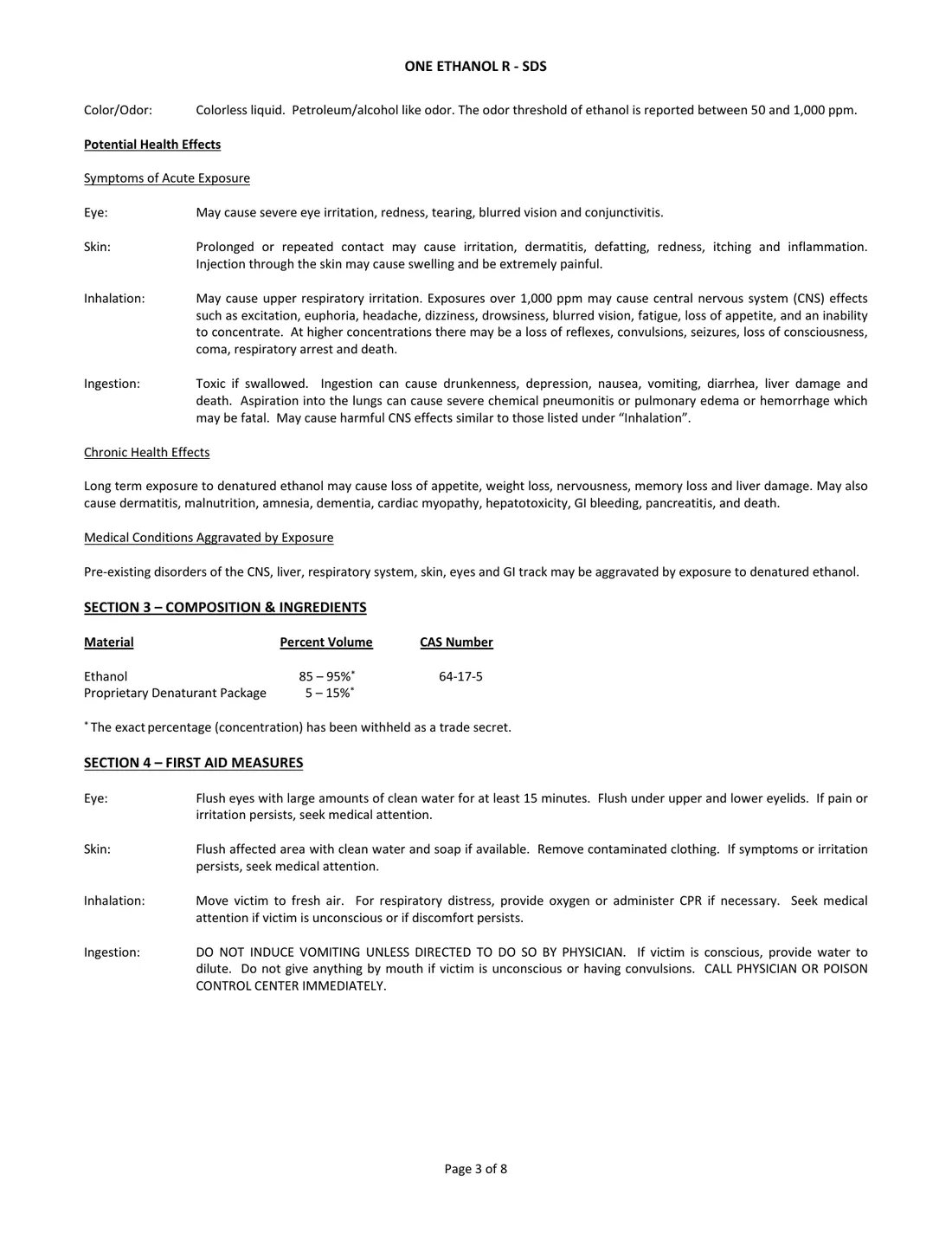
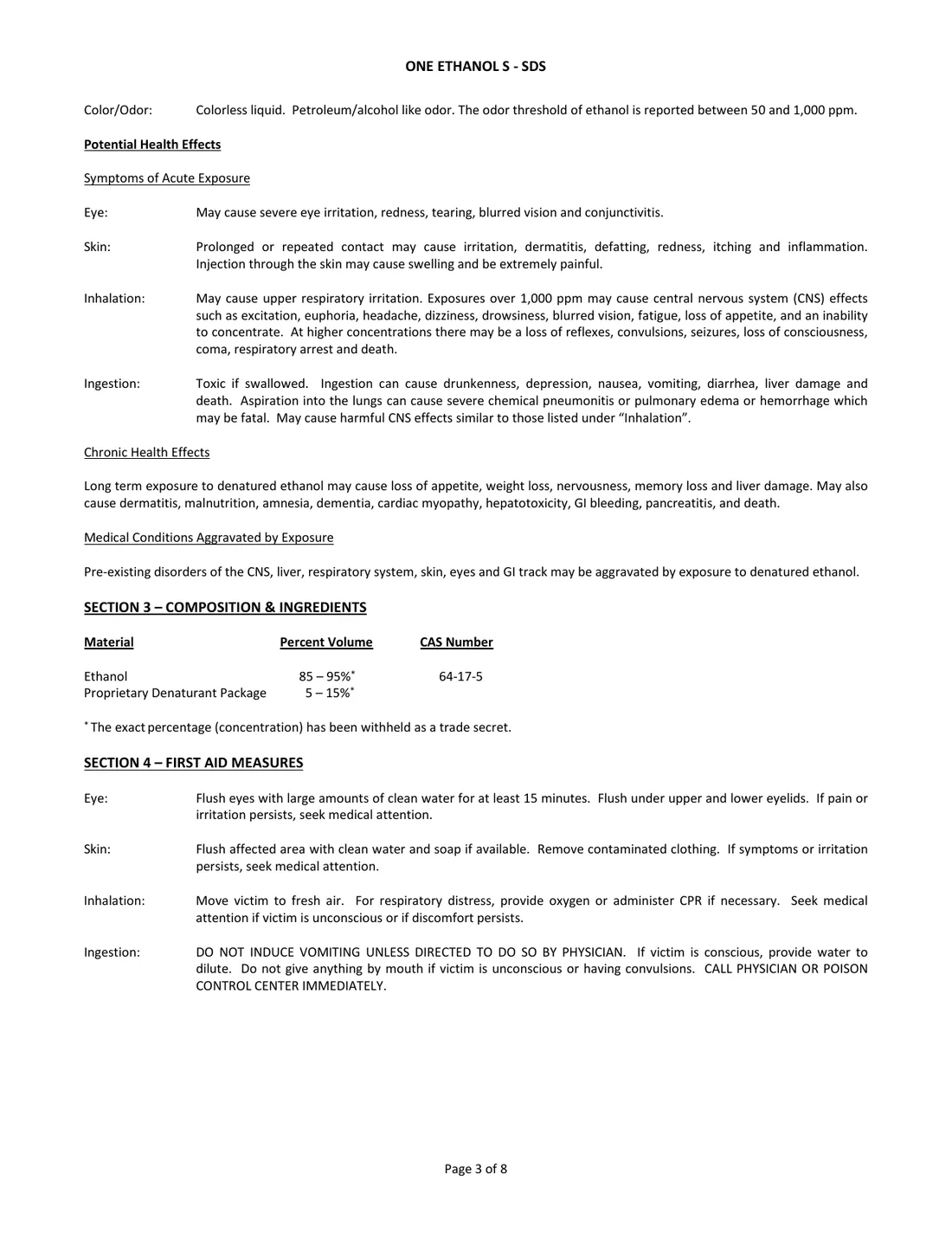
Color/Odor: Colorless liquid. Petroleum/alcohol like odor. The odor threshold of ethanol is reported between 50 and 1,000 ppm.
Potential Health Effects
Symptoms of Acute Exposure
Eye: May cause severe eye irritation, redness, tearing, blurred vision and conjunctivitis.
Skin: Prolonged or repeated contact may cause irritation, dermatitis, defatting, redness, itching and inflammation. Injection through the skin may cause swelling and be extremely painful.
Inhalation: May cause upper respiratory irritation. Exposures over 1,000 ppm may cause central nervous system (CNS) effects such as excitation, euphoria, headache, dizziness, drowsiness, blurred vision, fatigue, loss of appetite, and an inability to concentrate. At higher concentrations there may be a loss of reflexes, convulsions, seizures, loss of consciousness, coma, respiratory arrest and death.
Ingestion: Toxic if swallowed. Ingestion can cause drunkenness, depression, nausea, vomiting, diarrhea, liver damage and death. Aspiration into the lungs can cause severe chemical pneumonitis or pulmonary edema or hemorrhage which may be fatal. May cause harmful CNS effects similar to those listed under “Inhalation”.
Chronic Health Effects
Long term exposure to denatured ethanol may cause loss of appetite, weight loss, nervousness, memory loss and liver damage. May also cause dermatitis, malnutrition, amnesia, dementia, cardiac myopathy, hepatotoxicity, GI bleeding, pancreatitis, and death.
Medical Conditions Aggravated by Exposure
Pre-existing disorders of the CNS, liver, respiratory system, skin, eyes and GI track may be aggravated by exposure to denatured ethanol.
SECTION 3 – COMPOSITION & INGREDIENTS
Material Percent Volume CAS Number
Ethanol 85 – 95%* 64-17-5 Proprietary Denaturant Package 5 – 15%*
* The exact percentage (concentration) has been withheld as a trade secret.
SECTION 4 – FIRST AID MEASURES
Eye: Flush eyes with large amounts of clean water for at least 15 minutes. Flush under upper and lower eyelids. If pain or irritation persists, seek medical attention.
Skin: Flush affected area with clean water and soap if available. Remove contaminated clothing. If symptoms or irritation persists, seek medical attention.
Inhalation: Move victim to fresh air. For respiratory distress, provide oxygen or administer CPR if necessary. Seek medical attention if victim is unconscious or if discomfort persists.
Ingestion: DO NOT INDUCE VOMITING UNLESS DIRECTED TO DO SO BY PHYSICIAN. If victim is conscious, provide water to dilute. Do not give anything by mouth if victim is unconscious or having convulsions. CALL PHYSICIAN OR POISON CONTROL CENTER IMMEDIATELY.
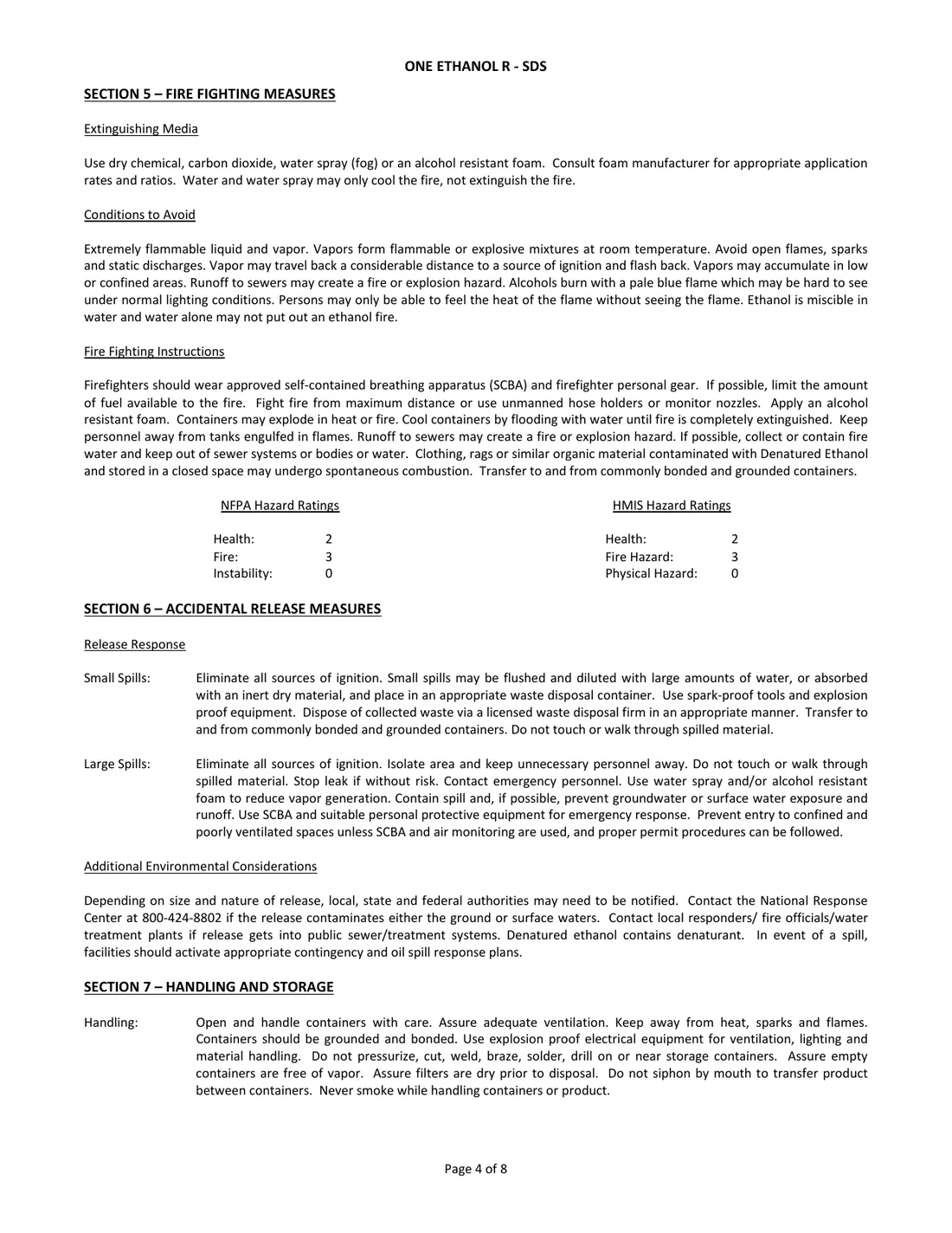
Page 3 of 8 ONE ETHANOL R - SDS SECTION 5 – FIRE FIGHTING MEASURES
Extinguishing Media
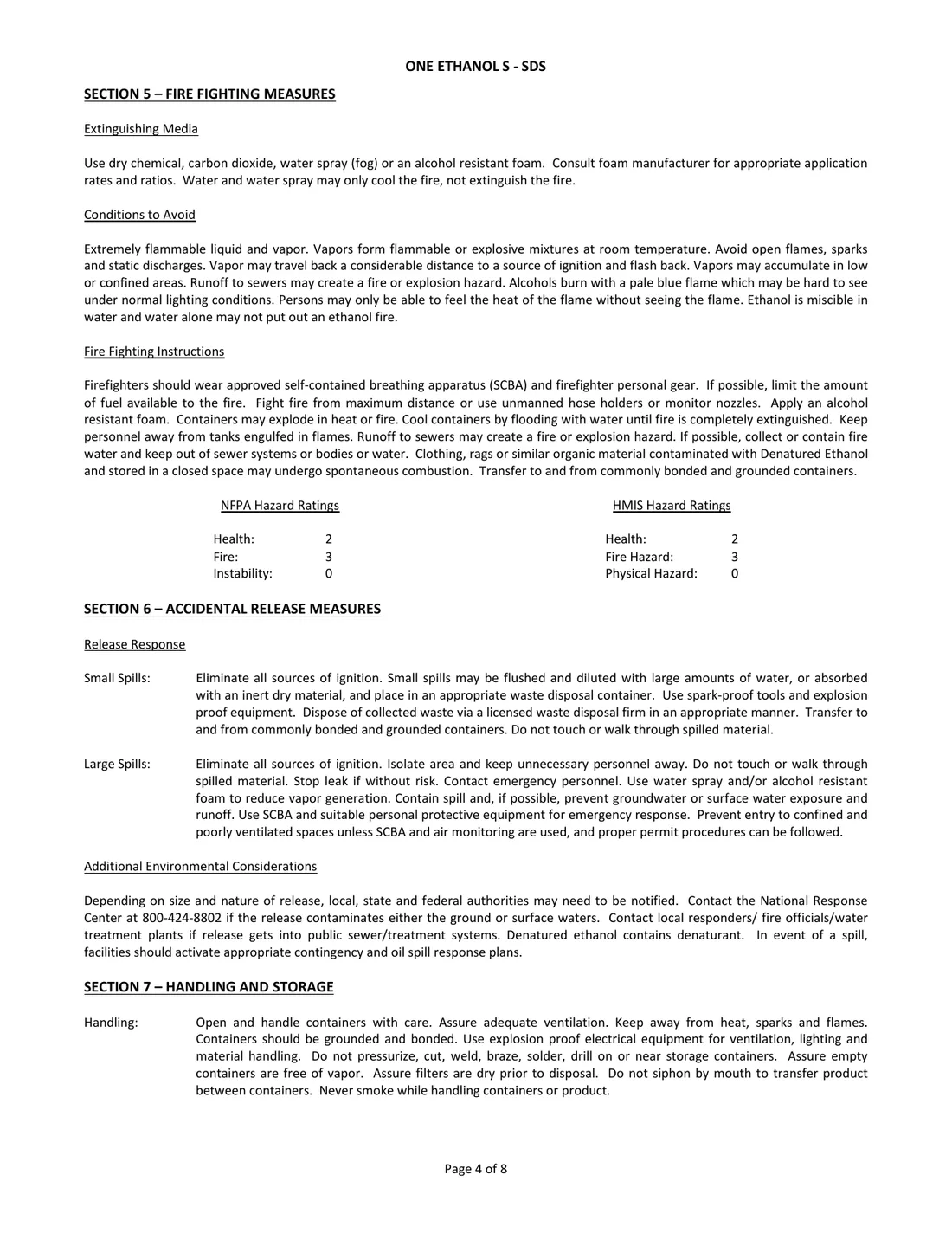
Use dry chemical, carbon dioxide, water spray (fog) or an alcohol resistant foam. Consult foam manufacturer for appropriate application rates and ratios. Water and water spray may only cool the fire, not extinguish the fire.
Conditions to Avoid
Extremely flammable liquid and vapor. Vapors form flammable or explosive mixtures at room temperature. Avoid open flames, sparks and static discharges. Vapor may travel back a considerable distance to a source of ignition and flash back. Vapors may accumulate in low or confined areas. Runoff to sewers may create a fire or explosion hazard. Alcohols burn with a pale blue flame which may be hard to see under normal lighting conditions. Persons may only be able to feel the heat of the flame without seeing the flame. Ethanol is miscible in water and water alone may not put out an ethanol fire.
Fire Fighting Instructions
Firefighters should wear approved self-contained breathing apparatus (SCBA) and firefighter personal gear. If possible, limit the amount of fuel available to the fire. Fight fire from maximum distance or use unmanned hose holders or monitor nozzles. Apply an alcohol resistant foam. Containers may explode in heat or fire. Cool containers by flooding with water until fire is completely extinguished. Keep personnel away from tanks engulfed in flames. Runoff to sewers may create a fire or explosion hazard. If possible, collect or contain fire water and keep out of sewer systems or bodies or water. Clothing, rags or similar organic material contaminated with Denatured Ethanol and stored in a closed space may undergo spontaneous combustion. Transfer to and from commonly bonded and grounded containers.
NFPA Hazard Ratings HMIS Hazard Ratings
Health: 2 Health: 2 Fire: 3 Fire Hazard: 3 Instability: 0 Physical Hazard: 0
SECTION 6 – ACCIDENTAL RELEASE MEASURES
Release Response
Small Spills: Eliminate all sources of ignition. Small spills may be flushed and diluted with large amounts of water, or absorbed with an inert dry material, and place in an appropriate waste disposal container. Use spark-proof tools and explosion proof equipment. Dispose of collected waste via a licensed waste disposal firm in an appropriate manner. Transfer to and from commonly bonded and grounded containers. Do not touch or walk through spilled material.
Large Spills: Eliminate all sources of ignition. Isolate area and keep unnecessary personnel away. Do not touch or walk through spilled material. Stop leak if without risk. Contact emergency personnel. Use water spray and/or alcohol resistant foam to reduce vapor generation. Contain spill and, if possible, prevent groundwater or surface water exposure and runoff. Use SCBA and suitable personal protective equipment for emergency response. Prevent entry to confined and poorly ventilated spaces unless SCBA and air monitoring are used, and proper permit procedures can be followed.
Additional Environmental Considerations
Depending on size and nature of release, local, state and federal authorities may need to be notified. Contact the National Response Center at 800-424-8802 if the release contaminates either the ground or surface waters. Contact local responders/ fire officials/water treatment plants if release gets into public sewer/treatment systems. Denatured ethanol contains denaturant. In event of a spill, facilities should activate appropriate contingency and oil spill response plans.
SECTION 7 – HANDLING AND STORAGE
Handling: Open and handle containers with care. Assure adequate ventilation. Keep away from heat, sparks and flames. Containers should be grounded and bonded. Use explosion proof electrical equipment for ventilation, lighting and material handling. Do not pressurize, cut, weld, braze, solder, drill on or near storage containers. Assure empty containers are free of vapor. Assure filters are dry prior to disposal. Do not siphon by mouth to transfer product between containers. Never smoke while handling containers or product.
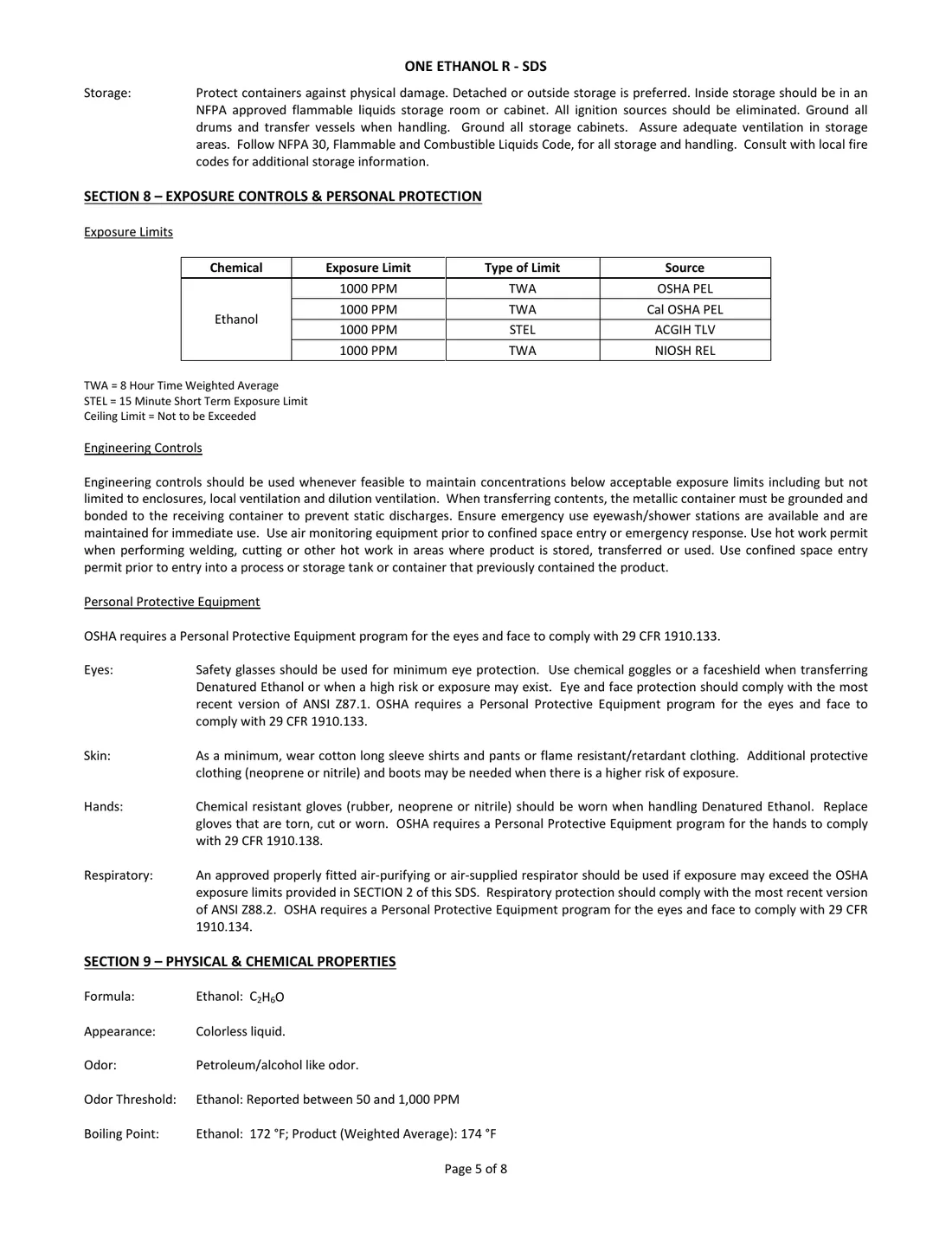
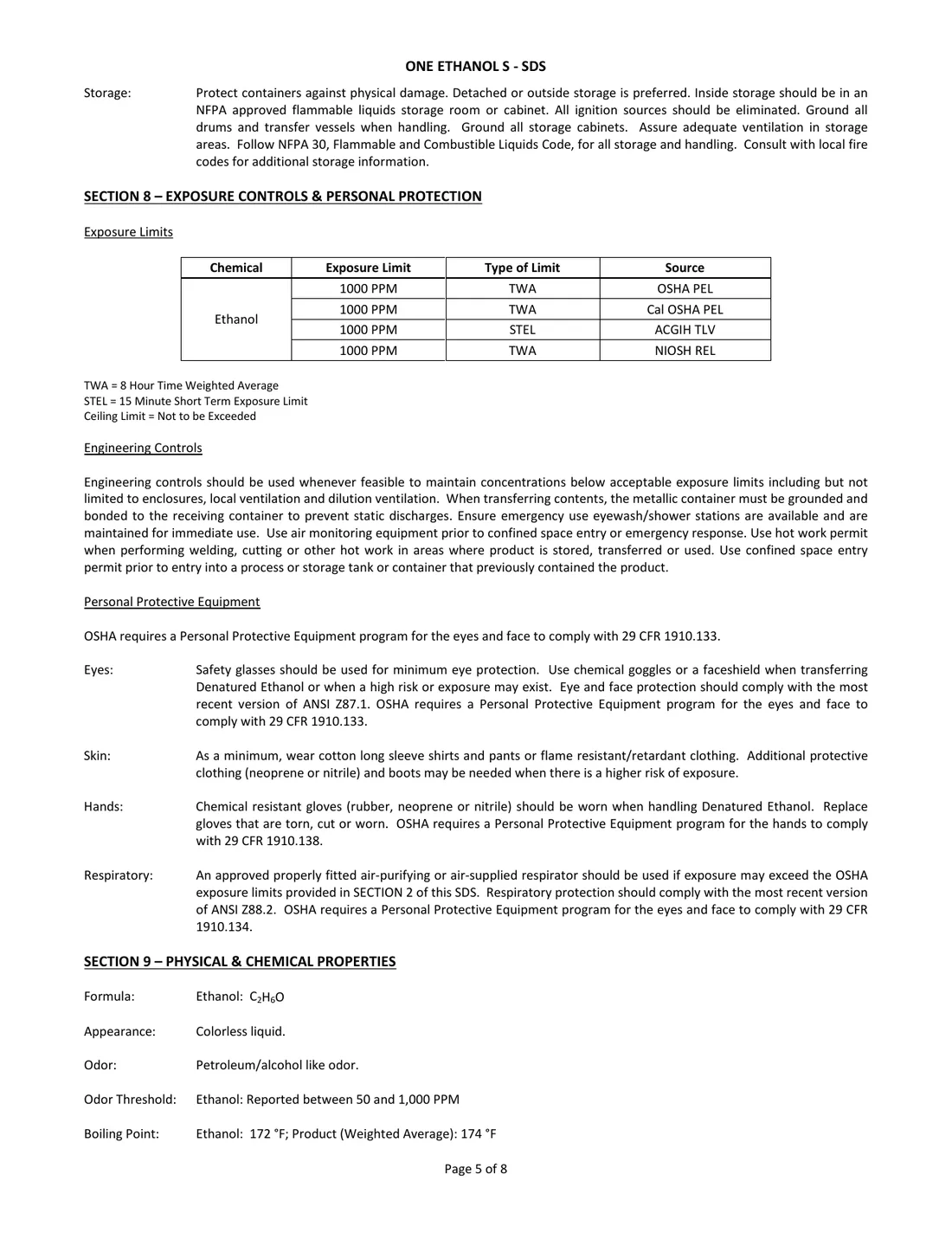
Page 4 of 8 ONE ETHANOL R - SDS Storage: Protect containers against physical damage. Detached or outside storage is preferred. Inside storage should be in an NFPA approved flammable liquids storage room or cabinet. All ignition sources should be eliminated. Ground all drums and transfer vessels when handling. Ground all storage cabinets. Assure adequate ventilation in storage areas. Follow NFPA 30, Flammable and Combustible Liquids Code, for all storage and handling. Consult with local fire codes for additional storage information.
SECTION 8 – EXPOSURE CONTROLS & PERSONAL PROTECTION
Exposure Limits
Chemical Exposure Limit Type of Limit Source 1000 PPM TWA OSHA PEL 1000 PPM TWA Cal OSHA PEL Ethanol 1000 PPM STEL ACGIH TLV 1000 PPM TWA NIOSH REL
TWA = 8 Hour Time Weighted Average STEL = 15 Minute Short Term Exposure Limit Ceiling Limit = Not to be Exceeded
Engineering Controls
Engineering controls should be used whenever feasible to maintain concentrations below acceptable exposure limits including but not limited to enclosures, local ventilation and dilution ventilation. When transferring contents, the metallic container must be grounded and bonded to the receiving container to prevent static discharges. Ensure emergency use eyewash/shower stations are available and are maintained for immediate use. Use air monitoring equipment prior to confined space entry or emergency response. Use hot work permit when performing welding, cutting or other hot work in areas where product is stored, transferred or used. Use confined space entry permit prior to entry into a process or storage tank or container that previously contained the product.
Personal Protective Equipment
OSHA requires a Personal Protective Equipment program for the eyes and face to comply with 29 CFR 1910.133.
Eyes: Safety glasses should be used for minimum eye protection. Use chemical goggles or a faceshield when transferring Denatured Ethanol or when a high risk or exposure may exist. Eye and face protection should comply with the most recent version of ANSI Z87.1. OSHA requires a Personal Protective Equipment program for the eyes and face to comply with 29 CFR 1910.133.
Skin: As a minimum, wear cotton long sleeve shirts and pants or flame resistant/retardant clothing. Additional protective clothing (neoprene or nitrile) and boots may be needed when there is a higher risk of exposure.
Hands: Chemical resistant gloves (rubber, neoprene or nitrile) should be worn when handling Denatured Ethanol. Replace gloves that are torn, cut or worn. OSHA requires a Personal Protective Equipment program for the hands to comply with 29 CFR 1910.138.
Respiratory: An approved properly fitted air-purifying or air-supplied respirator should be used if exposure may exceed the OSHA exposure limits provided in SECTION 2 of this SDS. Respiratory protection should comply with the most recent version of ANSI Z88.2. OSHA requires a Personal Protective Equipment program for the eyes and face to comply with 29 CFR 1910.134.
SECTION 9 – PHYSICAL & CHEMICAL PROPERTIES
Formula: Ethanol: C2H6O
Appearance: Colorless liquid.
Odor: Petroleum/alcohol like odor.
Odor Threshold: Ethanol: Reported between 50 and 1,000 PPM
Boiling Point: Ethanol: 172 °F; Product (Weighted Average): 174 °F
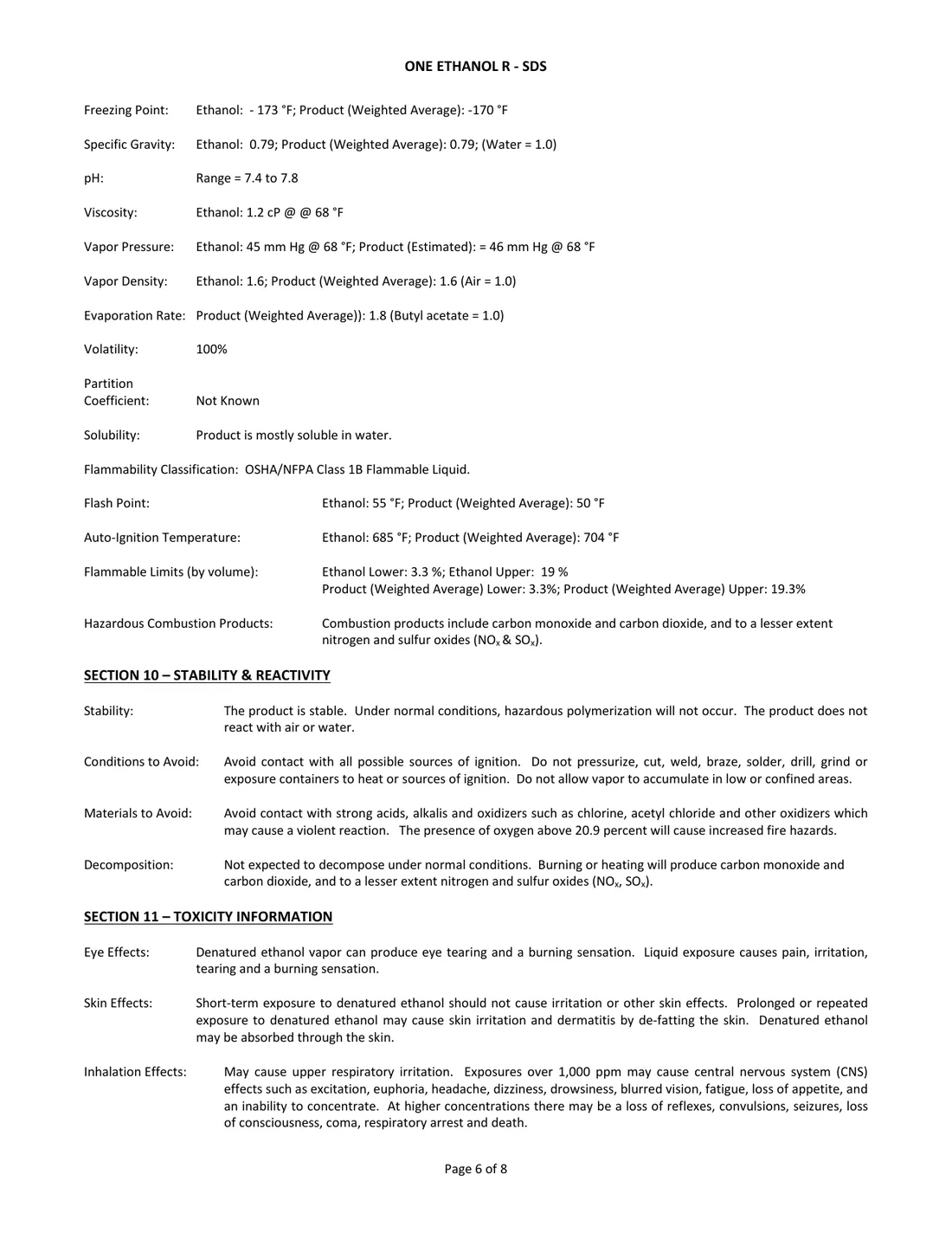
Page 5 of 8 ONE ETHANOL R - SDS
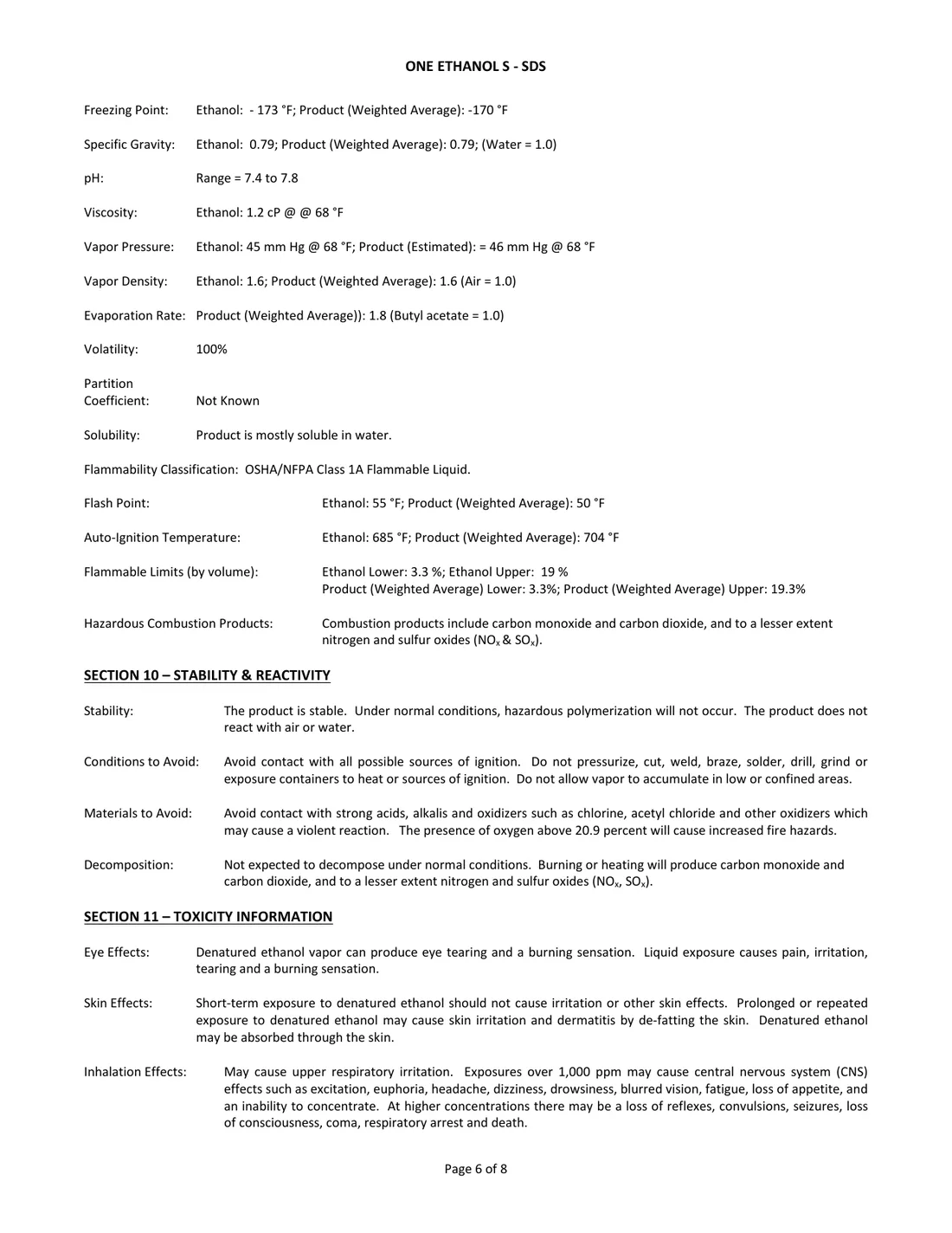
Freezing Point: Ethanol: - 173 °F; Product (Weighted Average): -170 °F
Specific Gravity: Ethanol: 0.79; Product (Weighted Average): 0.79; (Water = 1.0)
pH: Range = 7.4 to 7.8
Viscosity: Ethanol: 1.2 cP @ @ 68 °F
Vapor Pressure: Ethanol: 45 mm Hg @ 68 °F; Product (Estimated): = 46 mm Hg @ 68 °F
Vapor Density: Ethanol: 1.6; Product (Weighted Average): 1.6 (Air = 1.0)
Evaporation Rate: Product (Weighted Average)): 1.8 (Butyl acetate = 1.0)
Volatility: 100%
Partition Coefficient: Not Known
Solubility: Product is mostly soluble in water.
Flammability Classification: OSHA/NFPA Class 1B Flammable Liquid.
Flash Point: Ethanol: 55 °F; Product (Weighted Average): 50 °F
Auto-Ignition Temperature: Ethanol: 685 °F; Product (Weighted Average): 704 °F
Flammable Limits (by volume): Ethanol Lower: 3.3 %; Ethanol Upper: 19 % Product (Weighted Average) Lower: 3.3%; Product (Weighted Average) Upper: 19.3%
Hazardous Combustion Products: Combustion products include carbon monoxide and carbon dioxide, and to a lesser extent nitrogen and sulfur oxides (NOx & SOx).
SECTION 10 – STABILITY & REACTIVITY
Stability: The product is stable. Under normal conditions, hazardous polymerization will not occur. The product does not react with air or water.
Conditions to Avoid: Avoid contact with all possible sources of ignition. Do not pressurize, cut, weld, braze, solder, drill, grind or exposure containers to heat or sources of ignition. Do not allow vapor to accumulate in low or confined areas.
Materials to Avoid: Avoid contact with strong acids, alkalis and oxidizers such as chlorine, acetyl chloride and other oxidizers which may cause a violent reaction. The presence of oxygen above 20.9 percent will cause increased fire hazards.
Decomposition: Not expected to decompose under normal conditions. Burning or heating will produce carbon monoxide and carbon dioxide, and to a lesser extent nitrogen and sulfur oxides (NOx, SOx).
SECTION 11 – TOXICITY INFORMATION
Eye Effects: Denatured ethanol vapor can produce eye tearing and a burning sensation. Liquid exposure causes pain, irritation, tearing and a burning sensation.
Skin Effects: Short-term exposure to denatured ethanol should not cause irritation or other skin effects. Prolonged or repeated exposure to denatured ethanol may cause skin irritation and dermatitis by de-fatting the skin. Denatured ethanol may be absorbed through the skin.
Inhalation Effects: May cause upper respiratory irritation. Exposures over 1,000 ppm may cause central nervous system (CNS) effects such as excitation, euphoria, headache, dizziness, drowsiness, blurred vision, fatigue, loss of appetite, and an inability to concentrate. At higher concentrations there may be a loss of reflexes, convulsions, seizures, loss of consciousness, coma, respiratory arrest and death.
Page 6 of 8 ONE ETHANOL R - SDS Ethanol: Inhalation LC-50, Rat (10 hour) = 20,000 PPM
Ingestion Effects: Toxic by ingestion. Ethanol is rapidly absorbed through the gastrointestinal tract and is normally metabolized and excreted in a few hours. Can be fatal or cause blindness if swallowed in extreme quantities. Ingestion can cause headache, nausea, dizziness or narcosis. Chronic over-exposure can cause damage to the gastrointestinal tract, CNS, liver, kidneys and cardiovascular system.
Ethanol: Oral LD-50, Rat = 7,060 mg/kg
Carcinogenicity: None of the ingredients are listed by IARC as a Group 1, or Group 2A or 2B carcinogen. None of the ingredients are listed by NTP as known or reasonably anticipated to be human carcinogens. None of the ingredients are listed by OSHA as known or potential carcinogens.
Reproductive & Developmental Effects: May cause defects in the CNS, heart, kidney, lungs, gastrointestinal tract and limbs. Exposure to high concentrations during pregnancy may cause reproductive and adverse effects in offspring.
SECTION 12 – ECOLOGICAL INFORMATION
Environmental Fate: When spilled on land, Denatured Ethanol will volatilize, biodegrade and/or leach into the ground. It is anticipated that ethanol will neither absorb into soil nor bio-concentrate in aquatic organisms. When spilled into surface waters, ethanol is miscible with water. May be toxic to species such as the daphnia magna (water flea) and others depending on concentration. In water, photolysis, oxidation, hydrolysis, and biodegradation are expected to occur
Bioaccumulation: Bioaccumulation is not expected to occur.
SECTION 13 – DISPOSAL CONSIDERATIONS
The generation of waste should be avoided or minimized. Reclaim or reuse whenever possible. All recovered material should be labeled, packaged, transported and disposed of or reclaimed in conformance with applicable state and federal laws and regulations. Dispose of products via a licensed waste disposal contractor. Avoid dispersal of spilled material and runoff and contact with soil, waterways, drains and sewers.
Consult your local, state or federal authorities.
SECTION 14 – TRANSPORT INFORMATION
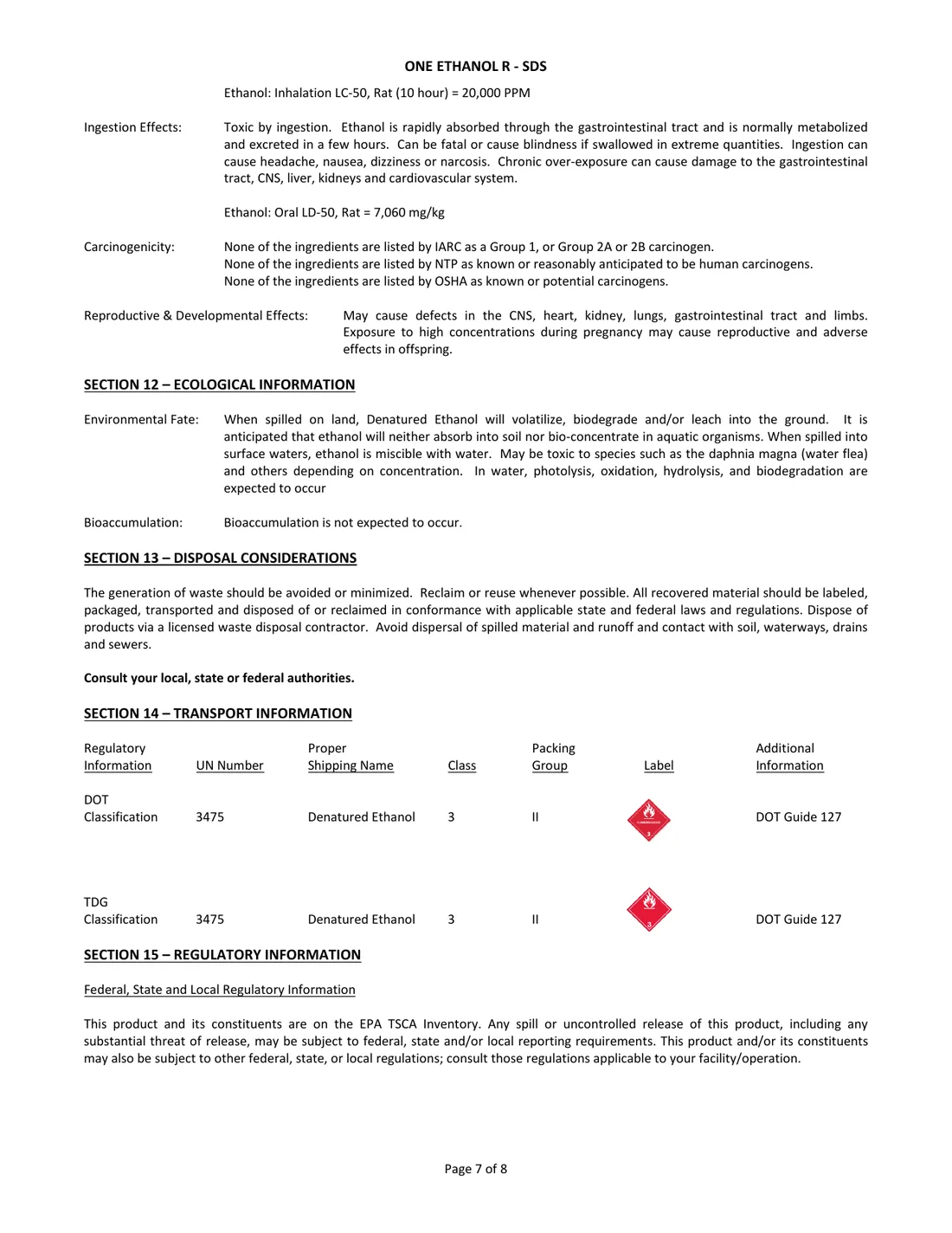
Regulatory Proper Packing Additional Information UN Number Shipping Name Class Group Label Information
DOT Classification 3475 Denatured Ethanol 3 II DOT Guide 127
TDG Classification 3475 Denatured Ethanol 3 II DOT Guide 127
SECTION 15 – REGULATORY INFORMATION
Federal, State and Local Regulatory Information
This product and its constituents are on the EPA TSCA Inventory. Any spill or uncontrolled release of this product, including any substantial threat of release, may be subject to federal, state and/or local reporting requirements. This product and/or its constituents may also be subject to other federal, state, or local regulations; consult those regulations applicable to your facility/operation.
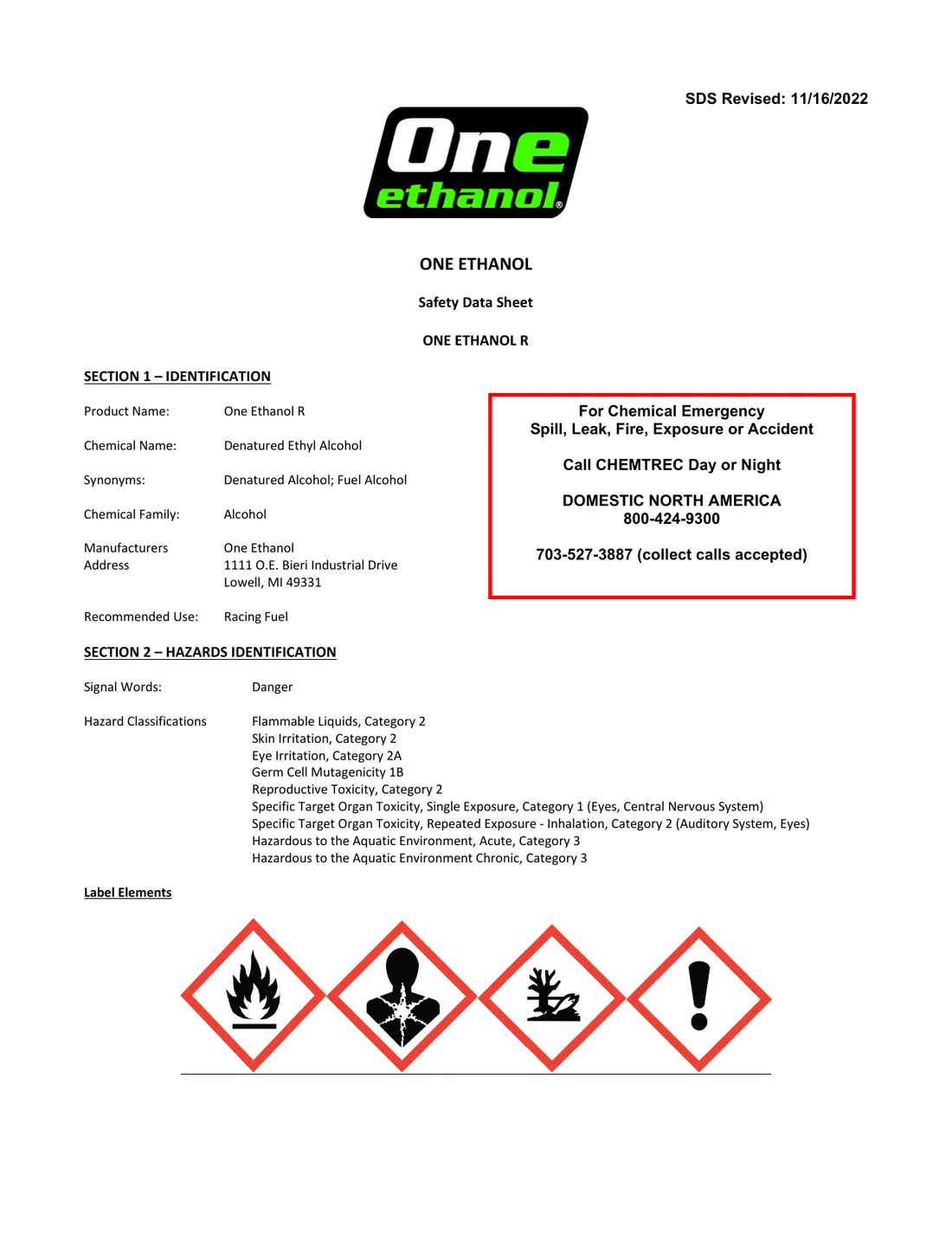
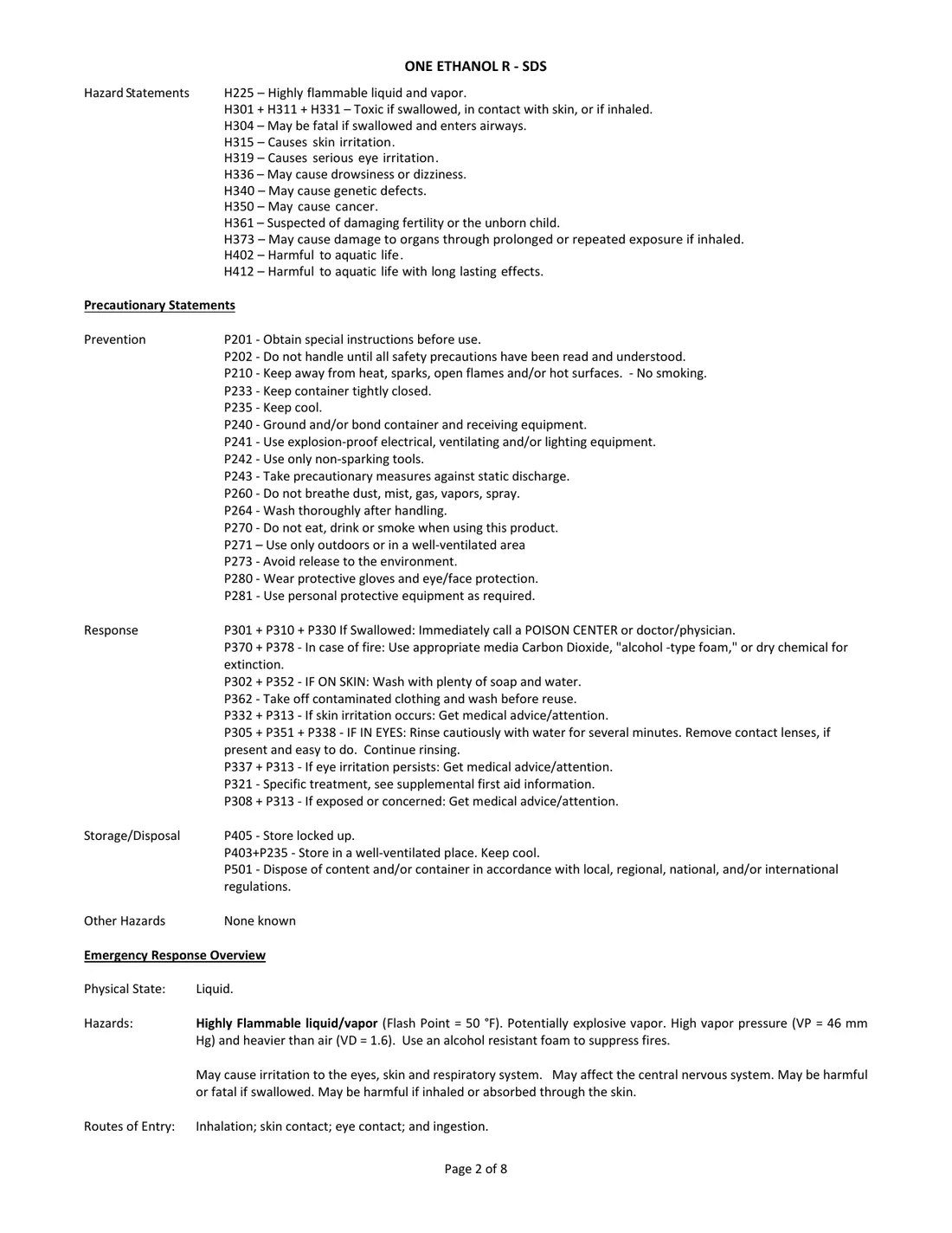
ATI instructions: One Ethanol R SDS: original pages with pictures (8)
ATI instructions: One Ethanol S SDS
ATI's instructions (8 pages), shown as published by ATI; the original pages with every picture are below.
SDS Revised: 11/16/2022
ONE ETHANOL Safety Data Sheet
ONE ETHANOL S
SECTION 1 – IDENTIFICATION
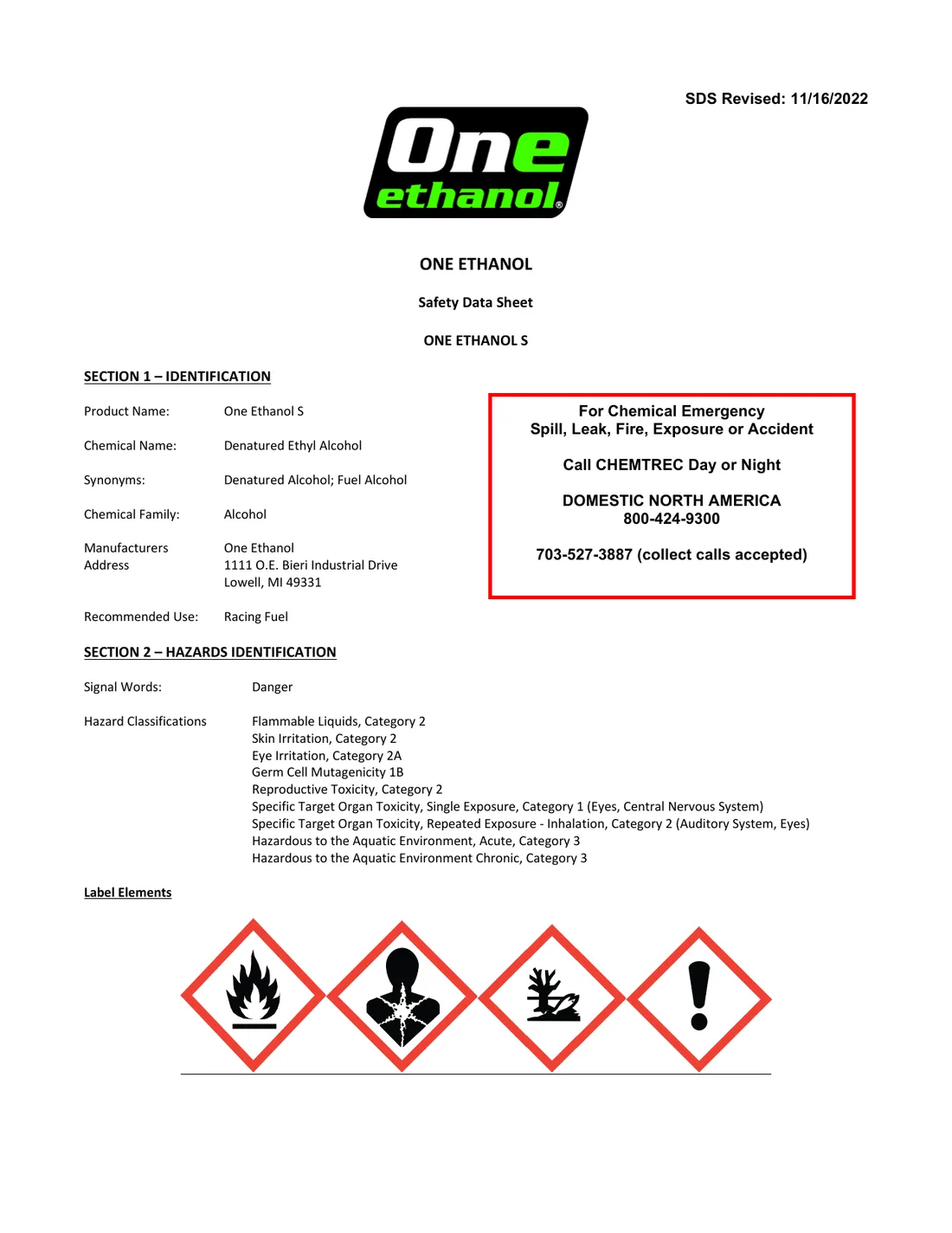
Product Name: One Ethanol S For Chemical Emergency Spill, Leak, Fire, Exposure or Accident Chemical Name: Denatured Ethyl Alcohol Call CHEMTREC Day or Night Synonyms: Denatured Alcohol; Fuel Alcohol DOMESTIC NORTH AMERICA Chemical Family: Alcohol 800-424-9300 Manufacturers One Ethanol 703-527-3887 (collect calls accepted) Address 1111 O.E. Bieri Industrial Drive Lowell, MI 49331
Recommended Use: Racing Fuel
SECTION 2 – HAZARDS IDENTIFICATION
Signal Words: Danger
Hazard Classifications Flammable Liquids, Category 2 Skin Irritation, Category 2 Eye Irritation, Category 2A Germ Cell Mutagenicity 1B Reproductive Toxicity, Category 2 Specific Target Organ Toxicity, Single Exposure, Category 1 (Eyes, Central Nervous System) Specific Target Organ Toxicity, Repeated Exposure - Inhalation, Category 2 (Auditory System, Eyes) Hazardous to the Aquatic Environment, Acute, Category 3 Hazardous to the Aquatic Environment Chronic, Category 3
Label Elements ONE ETHANOL S - SDS Hazard Statements H225 – Highly flammable liquid and vapor. H301 + H311 + H331 – Toxic if swallowed, in contact with skin, or if inhaled. H304 – May be fatal if swallowed and enters airways. H315 – Causes skin irritation. H319 – Causes serious eye irritation. H336 – May cause drowsiness or dizziness. H340 – May cause genetic defects. H350 – May cause cancer. H361 – Suspected of damaging fertility or the unborn child. H373 – May cause damage to organs through prolonged or repeated exposure if inhaled. H402 – Harmful to aquatic life. H412 – Harmful to aquatic life with long lasting effects.
Precautionary Statements
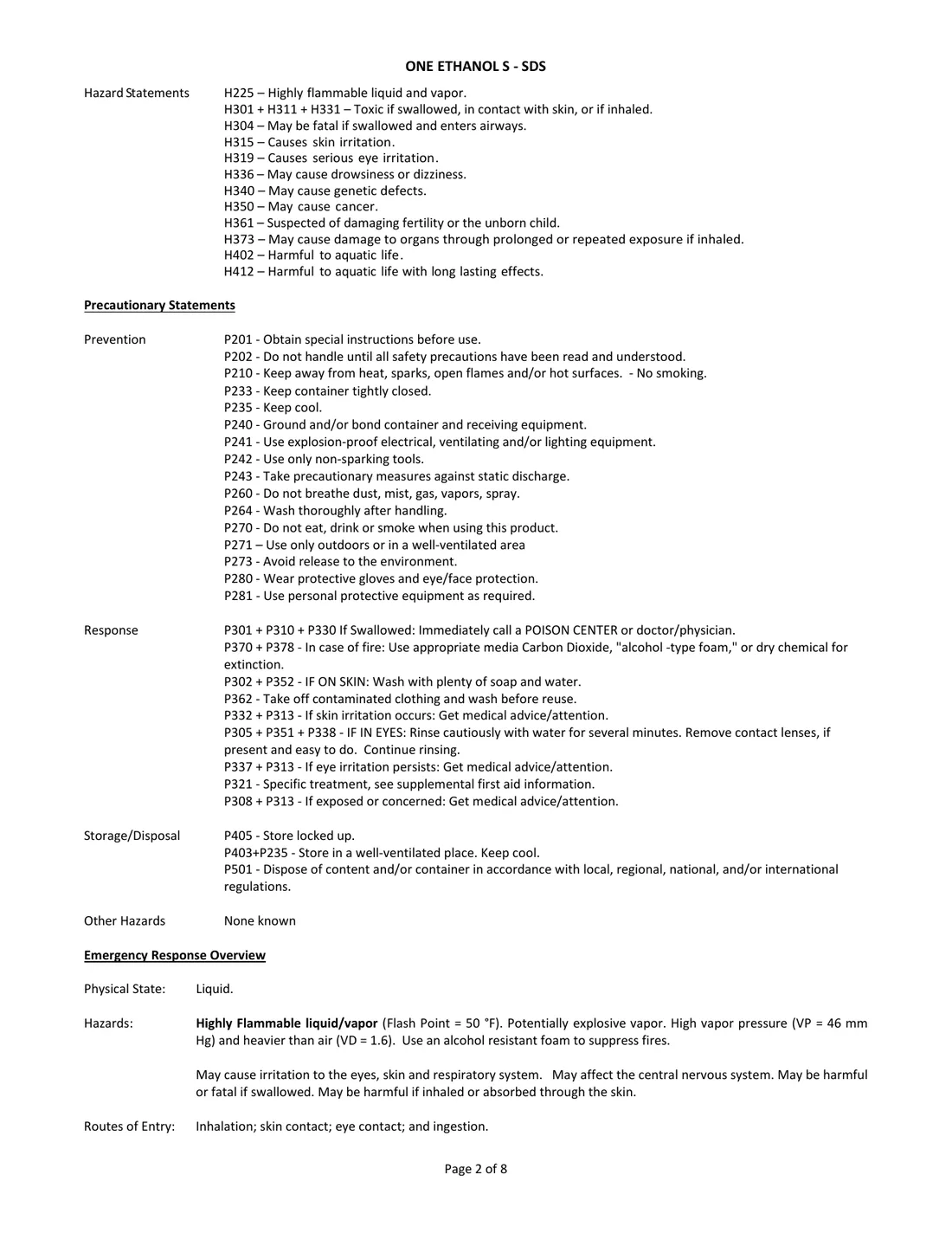
Prevention P201 - Obtain special instructions before use. P202 - Do not handle until all safety precautions have been read and understood. P210 - Keep away from heat, sparks, open flames and/or hot surfaces. - No smoking. P233 - Keep container tightly closed. P235 - Keep cool. P240 - Ground and/or bond container and receiving equipment. P241 - Use explosion-proof electrical, ventilating and/or lighting equipment. P242 - Use only non-sparking tools. P243 - Take precautionary measures against static discharge. P260 - Do not breathe dust, mist, gas, vapors, spray. P264 - Wash thoroughly after handling. P270 - Do not eat, drink or smoke when using this product. P271 – Use only outdoors or in a well-ventilated area P273 - Avoid release to the environment. P280 - Wear protective gloves and eye/face protection. P281 - Use personal protective equipment as required.
Response P301 + P310 + P330 If Swallowed: Immediately call a POISON CENTER or doctor/physician. P370 + P378 - In case of fire: Use appropriate media Carbon Dioxide, "alcohol -type foam," or dry chemical for extinction. P302 + P352 - IF ON SKIN: Wash with plenty of soap and water. P362 - Take off contaminated clothing and wash before reuse. P332 + P313 - If skin irritation occurs: Get medical advice/attention. P305 + P351 + P338 - IF IN EYES: Rinse cautiously with water for several minutes. Remove contact lenses, if present and easy to do. Continue rinsing. P337 + P313 - If eye irritation persists: Get medical advice/attention. P321 - Specific treatment, see supplemental first aid information. P308 + P313 - If exposed or concerned: Get medical advice/attention.
Storage/Disposal P405 - Store locked up. P403+P235 - Store in a well-ventilated place. Keep cool. P501 - Dispose of content and/or container in accordance with local, regional, national, and/or international regulations.
Other Hazards None known
Emergency Response Overview
Physical State: Liquid.
Hazards: Highly Flammable liquid/vapor (Flash Point = 50 °F). Potentially explosive vapor. High vapor pressure (VP = 46 mm Hg) and heavier than air (VD = 1.6). Use an alcohol resistant foam to suppress fires.
May cause irritation to the eyes, skin and respiratory system. May affect the central nervous system. May be harmful or fatal if swallowed. May be harmful if inhaled or absorbed through the skin.
Routes of Entry: Inhalation; skin contact; eye contact; and ingestion.
Page 2 of 8 ONE ETHANOL S - SDS
Color/Odor: Colorless liquid. Petroleum/alcohol like odor. The odor threshold of ethanol is reported between 50 and 1,000 ppm.
Potential Health Effects
Symptoms of Acute Exposure
Eye: May cause severe eye irritation, redness, tearing, blurred vision and conjunctivitis.
Skin: Prolonged or repeated contact may cause irritation, dermatitis, defatting, redness, itching and inflammation. Injection through the skin may cause swelling and be extremely painful.
Inhalation: May cause upper respiratory irritation. Exposures over 1,000 ppm may cause central nervous system (CNS) effects such as excitation, euphoria, headache, dizziness, drowsiness, blurred vision, fatigue, loss of appetite, and an inability to concentrate. At higher concentrations there may be a loss of reflexes, convulsions, seizures, loss of consciousness, coma, respiratory arrest and death.
Ingestion: Toxic if swallowed. Ingestion can cause drunkenness, depression, nausea, vomiting, diarrhea, liver damage and death. Aspiration into the lungs can cause severe chemical pneumonitis or pulmonary edema or hemorrhage which may be fatal. May cause harmful CNS effects similar to those listed under “Inhalation”.
Chronic Health Effects
Long term exposure to denatured ethanol may cause loss of appetite, weight loss, nervousness, memory loss and liver damage. May also cause dermatitis, malnutrition, amnesia, dementia, cardiac myopathy, hepatotoxicity, GI bleeding, pancreatitis, and death.
Medical Conditions Aggravated by Exposure
Pre-existing disorders of the CNS, liver, respiratory system, skin, eyes and GI track may be aggravated by exposure to denatured ethanol.
SECTION 3 – COMPOSITION & INGREDIENTS
Material Percent Volume CAS Number
Ethanol 85 – 95%* 64-17-5 Proprietary Denaturant Package 5 – 15%*
* The exact percentage (concentration) has been withheld as a trade secret.
SECTION 4 – FIRST AID MEASURES
Eye: Flush eyes with large amounts of clean water for at least 15 minutes. Flush under upper and lower eyelids. If pain or irritation persists, seek medical attention.
Skin: Flush affected area with clean water and soap if available. Remove contaminated clothing. If symptoms or irritation persists, seek medical attention.
Inhalation: Move victim to fresh air. For respiratory distress, provide oxygen or administer CPR if necessary. Seek medical attention if victim is unconscious or if discomfort persists.
Ingestion: DO NOT INDUCE VOMITING UNLESS DIRECTED TO DO SO BY PHYSICIAN. If victim is conscious, provide water to dilute. Do not give anything by mouth if victim is unconscious or having convulsions. CALL PHYSICIAN OR POISON CONTROL CENTER IMMEDIATELY.
Page 3 of 8 ONE ETHANOL S - SDS SECTION 5 – FIRE FIGHTING MEASURES
Extinguishing Media
Use dry chemical, carbon dioxide, water spray (fog) or an alcohol resistant foam. Consult foam manufacturer for appropriate application rates and ratios. Water and water spray may only cool the fire, not extinguish the fire.
Conditions to Avoid
Extremely flammable liquid and vapor. Vapors form flammable or explosive mixtures at room temperature. Avoid open flames, sparks and static discharges. Vapor may travel back a considerable distance to a source of ignition and flash back. Vapors may accumulate in low or confined areas. Runoff to sewers may create a fire or explosion hazard. Alcohols burn with a pale blue flame which may be hard to see under normal lighting conditions. Persons may only be able to feel the heat of the flame without seeing the flame. Ethanol is miscible in water and water alone may not put out an ethanol fire.
Fire Fighting Instructions
Firefighters should wear approved self-contained breathing apparatus (SCBA) and firefighter personal gear. If possible, limit the amount of fuel available to the fire. Fight fire from maximum distance or use unmanned hose holders or monitor nozzles. Apply an alcohol resistant foam. Containers may explode in heat or fire. Cool containers by flooding with water until fire is completely extinguished. Keep personnel away from tanks engulfed in flames. Runoff to sewers may create a fire or explosion hazard. If possible, collect or contain fire water and keep out of sewer systems or bodies or water. Clothing, rags or similar organic material contaminated with Denatured Ethanol and stored in a closed space may undergo spontaneous combustion. Transfer to and from commonly bonded and grounded containers.
NFPA Hazard Ratings HMIS Hazard Ratings
Health: 2 Health: 2 Fire: 3 Fire Hazard: 3 Instability: 0 Physical Hazard: 0
SECTION 6 – ACCIDENTAL RELEASE MEASURES
Release Response
Small Spills: Eliminate all sources of ignition. Small spills may be flushed and diluted with large amounts of water, or absorbed with an inert dry material, and place in an appropriate waste disposal container. Use spark-proof tools and explosion proof equipment. Dispose of collected waste via a licensed waste disposal firm in an appropriate manner. Transfer to and from commonly bonded and grounded containers. Do not touch or walk through spilled material.
Large Spills: Eliminate all sources of ignition. Isolate area and keep unnecessary personnel away. Do not touch or walk through spilled material. Stop leak if without risk. Contact emergency personnel. Use water spray and/or alcohol resistant foam to reduce vapor generation. Contain spill and, if possible, prevent groundwater or surface water exposure and runoff. Use SCBA and suitable personal protective equipment for emergency response. Prevent entry to confined and poorly ventilated spaces unless SCBA and air monitoring are used, and proper permit procedures can be followed.
Additional Environmental Considerations
Depending on size and nature of release, local, state and federal authorities may need to be notified. Contact the National Response Center at 800-424-8802 if the release contaminates either the ground or surface waters. Contact local responders/ fire officials/water treatment plants if release gets into public sewer/treatment systems. Denatured ethanol contains denaturant. In event of a spill, facilities should activate appropriate contingency and oil spill response plans.
SECTION 7 – HANDLING AND STORAGE
Handling: Open and handle containers with care. Assure adequate ventilation. Keep away from heat, sparks and flames. Containers should be grounded and bonded. Use explosion proof electrical equipment for ventilation, lighting and material handling. Do not pressurize, cut, weld, braze, solder, drill on or near storage containers. Assure empty containers are free of vapor. Assure filters are dry prior to disposal. Do not siphon by mouth to transfer product between containers. Never smoke while handling containers or product.
Page 4 of 8 ONE ETHANOL S - SDS Storage: Protect containers against physical damage. Detached or outside storage is preferred. Inside storage should be in an NFPA approved flammable liquids storage room or cabinet. All ignition sources should be eliminated. Ground all drums and transfer vessels when handling. Ground all storage cabinets. Assure adequate ventilation in storage areas. Follow NFPA 30, Flammable and Combustible Liquids Code, for all storage and handling. Consult with local fire codes for additional storage information.
SECTION 8 – EXPOSURE CONTROLS & PERSONAL PROTECTION
Exposure Limits
Chemical Exposure Limit Type of Limit Source 1000 PPM TWA OSHA PEL 1000 PPM TWA Cal OSHA PEL Ethanol 1000 PPM STEL ACGIH TLV 1000 PPM TWA NIOSH REL
TWA = 8 Hour Time Weighted Average STEL = 15 Minute Short Term Exposure Limit Ceiling Limit = Not to be Exceeded
Engineering Controls
Engineering controls should be used whenever feasible to maintain concentrations below acceptable exposure limits including but not limited to enclosures, local ventilation and dilution ventilation. When transferring contents, the metallic container must be grounded and bonded to the receiving container to prevent static discharges. Ensure emergency use eyewash/shower stations are available and are maintained for immediate use. Use air monitoring equipment prior to confined space entry or emergency response. Use hot work permit when performing welding, cutting or other hot work in areas where product is stored, transferred or used. Use confined space entry permit prior to entry into a process or storage tank or container that previously contained the product.
Personal Protective Equipment
OSHA requires a Personal Protective Equipment program for the eyes and face to comply with 29 CFR 1910.133.
Eyes: Safety glasses should be used for minimum eye protection. Use chemical goggles or a faceshield when transferring Denatured Ethanol or when a high risk or exposure may exist. Eye and face protection should comply with the most recent version of ANSI Z87.1. OSHA requires a Personal Protective Equipment program for the eyes and face to comply with 29 CFR 1910.133.
Skin: As a minimum, wear cotton long sleeve shirts and pants or flame resistant/retardant clothing. Additional protective clothing (neoprene or nitrile) and boots may be needed when there is a higher risk of exposure.
Hands: Chemical resistant gloves (rubber, neoprene or nitrile) should be worn when handling Denatured Ethanol. Replace gloves that are torn, cut or worn. OSHA requires a Personal Protective Equipment program for the hands to comply with 29 CFR 1910.138.
Respiratory: An approved properly fitted air-purifying or air-supplied respirator should be used if exposure may exceed the OSHA exposure limits provided in SECTION 2 of this SDS. Respiratory protection should comply with the most recent version of ANSI Z88.2. OSHA requires a Personal Protective Equipment program for the eyes and face to comply with 29 CFR 1910.134.
SECTION 9 – PHYSICAL & CHEMICAL PROPERTIES
Formula: Ethanol: C2H6O
Appearance: Colorless liquid.
Odor: Petroleum/alcohol like odor.
Odor Threshold: Ethanol: Reported between 50 and 1,000 PPM
Boiling Point: Ethanol: 172 °F; Product (Weighted Average): 174 °F
Page 5 of 8 ONE ETHANOL S - SDS
Freezing Point: Ethanol: - 173 °F; Product (Weighted Average): -170 °F
Specific Gravity: Ethanol: 0.79; Product (Weighted Average): 0.79; (Water = 1.0)
pH: Range = 7.4 to 7.8
Viscosity: Ethanol: 1.2 cP @ @ 68 °F
Vapor Pressure: Ethanol: 45 mm Hg @ 68 °F; Product (Estimated): = 46 mm Hg @ 68 °F
Vapor Density: Ethanol: 1.6; Product (Weighted Average): 1.6 (Air = 1.0)
Evaporation Rate: Product (Weighted Average)): 1.8 (Butyl acetate = 1.0)
Volatility: 100%
Partition Coefficient: Not Known
Solubility: Product is mostly soluble in water.
Flammability Classification: OSHA/NFPA Class 1A Flammable Liquid.
Flash Point: Ethanol: 55 °F; Product (Weighted Average): 50 °F
Auto-Ignition Temperature: Ethanol: 685 °F; Product (Weighted Average): 704 °F
Flammable Limits (by volume): Ethanol Lower: 3.3 %; Ethanol Upper: 19 % Product (Weighted Average) Lower: 3.3%; Product (Weighted Average) Upper: 19.3%
Hazardous Combustion Products: Combustion products include carbon monoxide and carbon dioxide, and to a lesser extent nitrogen and sulfur oxides (NOx & SOx).
SECTION 10 – STABILITY & REACTIVITY
Stability: The product is stable. Under normal conditions, hazardous polymerization will not occur. The product does not react with air or water.
Conditions to Avoid: Avoid contact with all possible sources of ignition. Do not pressurize, cut, weld, braze, solder, drill, grind or exposure containers to heat or sources of ignition. Do not allow vapor to accumulate in low or confined areas.
Materials to Avoid: Avoid contact with strong acids, alkalis and oxidizers such as chlorine, acetyl chloride and other oxidizers which may cause a violent reaction. The presence of oxygen above 20.9 percent will cause increased fire hazards.
Decomposition: Not expected to decompose under normal conditions. Burning or heating will produce carbon monoxide and carbon dioxide, and to a lesser extent nitrogen and sulfur oxides (NOx, SOx).
SECTION 11 – TOXICITY INFORMATION
Eye Effects: Denatured ethanol vapor can produce eye tearing and a burning sensation. Liquid exposure causes pain, irritation, tearing and a burning sensation.
Skin Effects: Short-term exposure to denatured ethanol should not cause irritation or other skin effects. Prolonged or repeated exposure to denatured ethanol may cause skin irritation and dermatitis by de-fatting the skin. Denatured ethanol may be absorbed through the skin.
Inhalation Effects: May cause upper respiratory irritation. Exposures over 1,000 ppm may cause central nervous system (CNS) effects such as excitation, euphoria, headache, dizziness, drowsiness, blurred vision, fatigue, loss of appetite, and an inability to concentrate. At higher concentrations there may be a loss of reflexes, convulsions, seizures, loss of consciousness, coma, respiratory arrest and death.
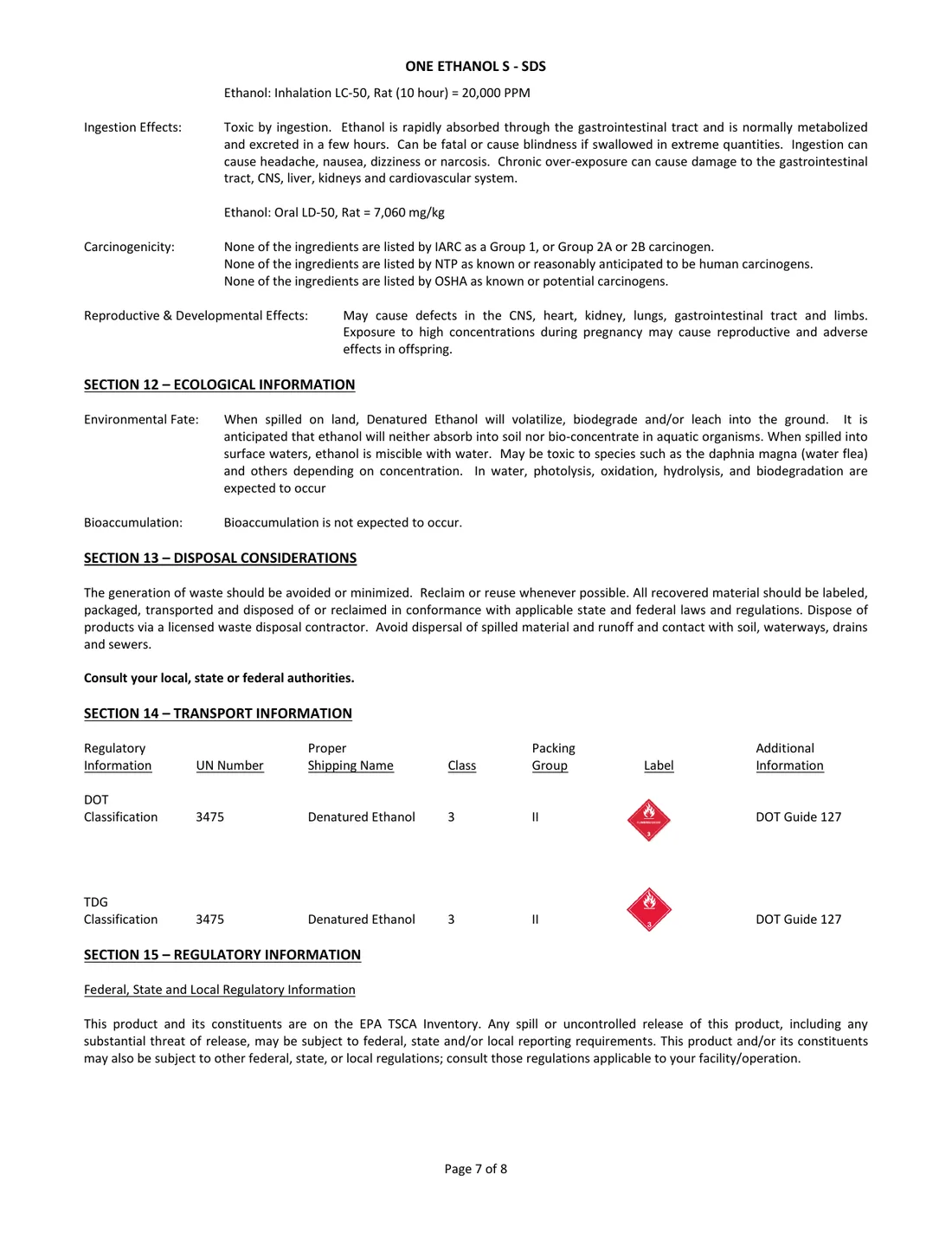
Page 6 of 8 ONE ETHANOL S - SDS Ethanol: Inhalation LC-50, Rat (10 hour) = 20,000 PPM
Ingestion Effects: Toxic by ingestion. Ethanol is rapidly absorbed through the gastrointestinal tract and is normally metabolized and excreted in a few hours. Can be fatal or cause blindness if swallowed in extreme quantities. Ingestion can cause headache, nausea, dizziness or narcosis. Chronic over-exposure can cause damage to the gastrointestinal tract, CNS, liver, kidneys and cardiovascular system.
Ethanol: Oral LD-50, Rat = 7,060 mg/kg
Carcinogenicity: None of the ingredients are listed by IARC as a Group 1, or Group 2A or 2B carcinogen. None of the ingredients are listed by NTP as known or reasonably anticipated to be human carcinogens. None of the ingredients are listed by OSHA as known or potential carcinogens.
Reproductive & Developmental Effects: May cause defects in the CNS, heart, kidney, lungs, gastrointestinal tract and limbs. Exposure to high concentrations during pregnancy may cause reproductive and adverse effects in offspring.
SECTION 12 – ECOLOGICAL INFORMATION
Environmental Fate: When spilled on land, Denatured Ethanol will volatilize, biodegrade and/or leach into the ground. It is anticipated that ethanol will neither absorb into soil nor bio-concentrate in aquatic organisms. When spilled into surface waters, ethanol is miscible with water. May be toxic to species such as the daphnia magna (water flea) and others depending on concentration. In water, photolysis, oxidation, hydrolysis, and biodegradation are expected to occur
Bioaccumulation: Bioaccumulation is not expected to occur.
SECTION 13 – DISPOSAL CONSIDERATIONS
The generation of waste should be avoided or minimized. Reclaim or reuse whenever possible. All recovered material should be labeled, packaged, transported and disposed of or reclaimed in conformance with applicable state and federal laws and regulations. Dispose of products via a licensed waste disposal contractor. Avoid dispersal of spilled material and runoff and contact with soil, waterways, drains and sewers.
Consult your local, state or federal authorities.
SECTION 14 – TRANSPORT INFORMATION
Regulatory Proper Packing Additional Information UN Number Shipping Name Class Group Label Information
DOT Classification 3475 Denatured Ethanol 3 II DOT Guide 127
TDG Classification 3475 Denatured Ethanol 3 II DOT Guide 127
SECTION 15 – REGULATORY INFORMATION
Federal, State and Local Regulatory Information
This product and its constituents are on the EPA TSCA Inventory. Any spill or uncontrolled release of this product, including any substantial threat of release, may be subject to federal, state and/or local reporting requirements. This product and/or its constituents may also be subject to other federal, state, or local regulations; consult those regulations applicable to your facility/operation.
ATI instructions: One Ethanol S SDS: original pages with pictures (8)
Installation instructions and pictures from ATI Performance Products (atiracing.com), shown as ATI publishes them.